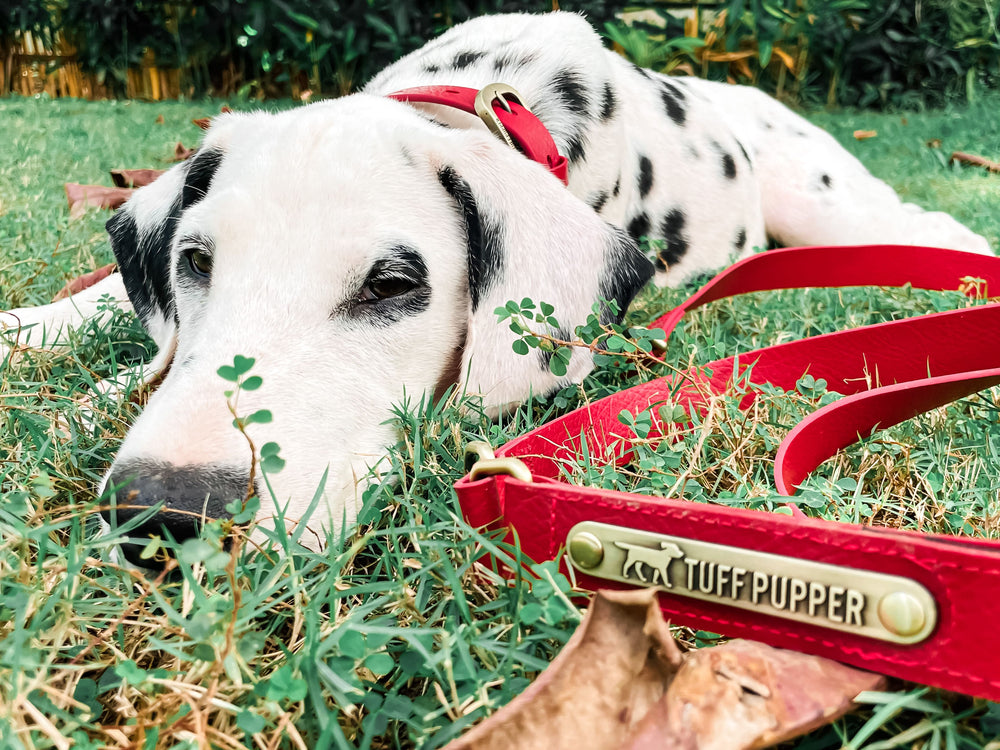


Dog Leashes for Every WalkThe right dog leash matches how and where you walk, from a quick trip around the block to a 30-foot recall session at the park. This collection covers every style: everyday walking leads, hands-free running leashes, chew-proof and tactical leads,...
The right dog leash matches how and where you walk, from a quick trip around the block to a 30-foot recall session at the park. This collection covers every style: everyday walking leads, hands-free running leashes, chew-proof and tactical leads, short traffic handles, and long training lines, all built from heavy-duty ballistic nylon with strong hardware and comfortable padded handles.
Match the leash to your walk
For everyday walks, a standard 4 to 6 foot lead with a padded handle gives easy control. Runners and cyclists do best with a hands-free bungee leash that clips to a waist belt and absorbs sudden pulls. If your dog chews through leashes, a steel-core chew-proof leash holds up to strong jaws. For close control in traffic or training, a short traffic leash keeps your dog by your side, and for recall practice or camping a 30-foot long training lead gives room to roam.
What is in this collection
You will find everyday walking leashes, hands-free and bungee running leashes, chew-proof steel-core leads, a tactical leash for heavy pullers, short traffic and training handles, long rope training lines, double-handle leashes with a second grip for close control, and reflective options for low-light walks. Most use 3M reflective stitching and rust-proof hardware so they last.
How to choose the right dog leash
Start with your dog's size, strength, and where you walk. Strong pullers and chewers need heavy-duty webbing or a steel core; runners need hands-free; puppies in training benefit from a short or long lead depending on the drill. For a full breakdown by situation, read our guide to picking a leash by use case.
How long should a dog leash be
A standard walking leash is 4 to 6 feet, which keeps your dog close without crowding. Use a 1 to 2 foot traffic handle for tight control in crowds, and a 15 to 30 foot long line for recall training and open spaces. Match the length to the job rather than using one leash for everything.
Leashes for pullers and chewers
If your dog pulls hard or chews, skip thin rope and choose thick ballistic nylon or a steel cable core, paired with a welded or aircraft-grade metal clip rather than plastic. A double-handle leash adds a second grip near the collar so you can bring your dog close fast when you need to.
-


Avail - Safety Leash
Preview the color: Epic Black Preview the color: Midnight Blue Preview the color: Steel Grey Preview the color: Hot Pink Preview the color: Olive Preview the color: Purple Preview the color: March Red Preview the color: Sage TealRegular price $14.96 USDSale price $14.96 USD Regular priceUnit price per -

 Double-Handle
Double Handle - Reflekt Leash
A second grip for fast, close control
Regular price $15.96 USDSale price $15.96 USD Regular priceUnit price per -

 Tactical
Action - Tactical Leash
Preview the color: Black Preview the color: Crimson Red Preview the color: Rover Green Preview the color: Midnight BlueBuilt for heavy pullers
Regular price $17.96 USDSale price $17.96 USD Regular priceUnit price per -


Classic - Waterproof Leash
Preview the color: Crimson Red Preview the color: Midnight Blue Preview the color: Black Preview the color: Tropical Teal Preview the color: Sky Blue Preview the color: Royal Purple Preview the color: Punch PinkRegular price $21.96 USDSale price $21.96 USD Regular priceUnit price per -


Traverse - Retractable Leash
Preview the color: Black Preview the color: Quetzal Green Preview the color: Nebulas Blue Preview the color: Ultra Violet Preview the color: Crimson RedRegular price From $17.96 USDSale price From $17.96 USD Regular priceUnit price per -

 Long Line
Wander - Extended Leash
Preview the color: March Red Preview the color: Epic Black Preview the color: Midnight Blue Preview the color: Purple30 feet of room to roam
Regular price $25.96 USDSale price $25.96 USD Regular priceUnit price per -


Tie-Out - Cables
Regular price From $8.96 USDSale price From $8.96 USD Regular priceUnit price per -

 Hands-Free
Hands-Free - Bungee Leash
Clips to a waist belt and absorbs sudden pulls
Regular price From $11.96 USDSale price From $11.96 USD Regular priceUnit price per -


Six-Function - Leash
Regular price $17.96 USDSale price $17.96 USD Regular priceUnit price per -


Waterproof - Leash Sleeves
Regular price From $10.96 USDSale price From $10.96 USD Regular priceUnit price per -


Adjustable - Running Leash
Regular price $18.96 USDSale price $18.96 USD Regular priceUnit price per -


Bungee - Running Leash
Regular price $19.96 USDSale price $19.96 USD Regular priceUnit price per -


Long Leash - Padded Handle
Regular price From $26.96 USDSale price From $26.96 USD Regular priceUnit price per -


Bungee - Leash Extension
Regular price From $11.96 USDSale price From $11.96 USD Regular priceUnit price per -

 Sold out
Sentry - Rope Leash
Regular price $16.96 USDSale price $16.96 USD Regular priceUnit price per -


Short Leash - Traffic Handle
Regular price From $12.96 USDSale price From $12.96 USD Regular priceUnit price per


Dog Leashes for Every Walk
The right dog leash matches how and where you walk, from a quick trip around the block to a 30-foot recall session at the park. This collection covers every style: everyday walking leads, hands-free running leashes, chew-proof and tactical leads, short traffic handles, and long training lines, all built from heavy-duty ballistic nylon with strong hardware and comfortable padded handles.
Match the leash to your walk
For everyday walks, a standard 4 to 6 foot lead with a padded handle gives easy control. Runners and cyclists do best with a hands-free bungee leash that clips to a waist belt and absorbs sudden pulls. If your dog chews through leashes, a steel-core chew-proof leash holds up to strong jaws. For close control in traffic or training, a short traffic leash keeps your dog by your side, and for recall practice or camping a 30-foot long training lead gives room to roam.
What is in this collection
You will find everyday walking leashes, hands-free and bungee running leashes, chew-proof steel-core leads, a tactical leash for heavy pullers, short traffic and training handles, long rope training lines, double-handle leashes with a second grip for close control, and reflective options for low-light walks. Most use 3M reflective stitching and rust-proof hardware so they last.
How to choose the right dog leash
Start with your dog's size, strength, and where you walk. Strong pullers and chewers need heavy-duty webbing or a steel core; runners need hands-free; puppies in training benefit from a short or long lead depending on the drill. For a full breakdown by situation, read our guide to picking a leash by use case.
How long should a dog leash be
A standard walking leash is 4 to 6 feet, which keeps your dog close without crowding. Use a 1 to 2 foot traffic handle for tight control in crowds, and a 15 to 30 foot long line for recall training and open spaces. Match the length to the job rather than using one leash for everything.
Leashes for pullers and chewers
If your dog pulls hard or chews, skip thin rope and choose thick ballistic nylon or a steel cable core, paired with a welded or aircraft-grade metal clip rather than plastic. A double-handle leash adds a second grip near the collar so you can bring your dog close fast when you need to.